
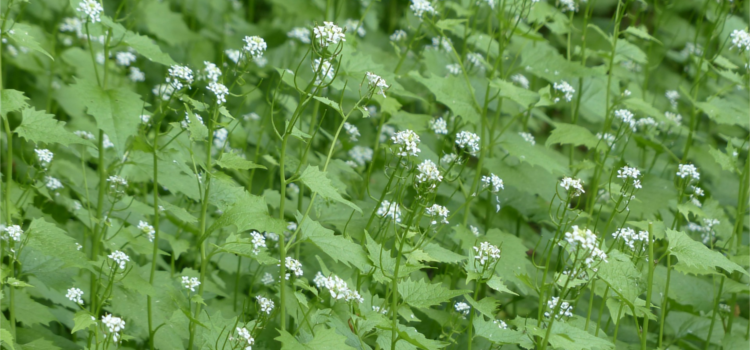
Spend any time in your local park or even in some backyards in your neighborhood and you’re likely to come across the garlic mustard plant. This is considered to be one of the most destructive invasive species of plants in North America, and the rate with which it’s spreading across the continent and doing some major damage to longstanding ecosystems is quite eye-opening.
Like most invasive species, garlic mustard can be difficult to get rid of. Fortunately, there are some ways you can at least minimize its presence in your area.
Here’s some helpful information about the garlic mustard plant.
The Life Cycle Of Garlic Mustard
Garlic mustard has a life cycle that lasts about two years. Seeds will germinate in the spring and then form into small clusters of heart-shaped leaves by the midsummer. Over winter these immature plants will stay green and photosynthesize when the weather is above freezing, which gives them a head start over the other native plants.
Those plants that survive the winter will produce some yellow or white four-petal flowers in their second year. Those flowers are tall and slender. In some years there may be more flowering plants than others, depending on where they’re at in their life cycle.
Removing Garlic Mustard
Garlic mustard can crowd out existing, native plant life and quickly overtake gardens, parks and forest foliage. While getting rid of garlic mustard is actually quite easy, it is also very time consuming and requires constant vigilance, as garlic mustard can pop up in areas even after you have thought you removed them all.
The real key is to prevent the development of seeds and keep them from spreading until you have depleted the existing seed bank. This could take anywhere from two to five years in a confined area.
When pulling garlic mustard out from the ground, you must make sure the roots are completely removed, or else the plant will sprout back up. Then, once you have collected the removed plants, bag them up, dry them and either burn them or bury them deep underground. Some landfills will do this for you, but otherwise it might be on you to create a controlled burn yourself. Herbicides can also be used.
There are drawbacks to burns and herbicides. There are, of course, potential dangers associated with either method, so it is important to use the utmost care when either spreading an herbicide or lighting a controlled burn. You should always wear protective gear and make sure you have read the proper instructions for the method you choose.
Which method will work best? It mostly depends on the size of your infestation and the type of environment the plant has been affecting. But in either circumstance you should work to eradicate the plant before its seeds develop.
For more information about garlic mustard and how you can remove it safely and effectively, contact one of the Soil Advocates specialists.
We respect & value your privacy


Leave A Comment