
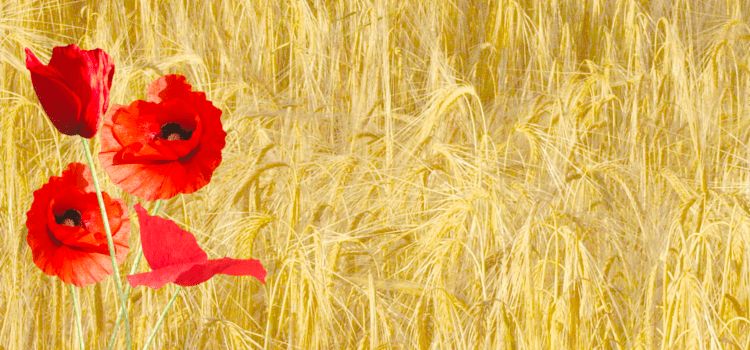
The poppy flower has a strong connection and a long history with Canadians. Lieutenant Colonel John McCrae, MD was the Canadian soldier who depicted poppies in the poem “In Flanders Fields”. No wonder the poppy has not only become a favorite flower, it has also become the symbol of Remembrance Day.
But even beyond its holiday usage, this unique plant is widely used in gardens and floral arrangements, and has many different native varieties, which add splashes of color to wildflower meadows across the countryside.

A Brief Background Of The Poppy Flower
The poppy is an ancient flower that has been used by gardeners for hundreds of years. They became the symbol of fallen warriors and used to commemorate holidays such as Remembrance Day and Veteran’s Day because of their propensity to appear on ravaged battlefields. There are records of white poppies appearing after battles as far back as those dominated by the warriors of Genghis Khan, as well as more recently in warzones after battles in World War I.
Poppy flowers have long been used for medicinal and culinary purposes as well as for aesthetic ones. The seeds, for example, are often used for flavoring in cakes and breads, and are used to make poppy seed oil.
Growing Poppies
To begin growing poppies, you can either plant seeds or divide roots of existing plants. When planting poppies from seed, sow them into poor or average soil in a sunny location for the best start.
Poppies grow from taproots, and if that taproot is disturbed while transplanting, you may lose a season of bloom. It’s best to divide poppies in autumn so the taproot has sufficient time to restore itself before the next growing season. But whichever planting method you choose, either can result in thick and healthy poppy foliage in your garden or meadow.
Poppy care is similar to the care of many other types of common garden flowers. Spent flowers should have their heads removed, so it is easier for new, healthy flower heads to grow in. The flowers need limited watering after they have settled—an overabundance of water can result in tall, unattractive flower growth.
There are many different varieties of poppies to choose from, so selecting one that is the best fit for your area and your garden can occasionally be a daunting task. Some examples:
- The California poppy self-seeds easily and is best used in locations where you desire a lot of poppies.
- Armenian poppies are smaller and more delicate, and require a bit more care.
- Oriental poppies provide the largest blooms of most of the types of poppies, but tend to die back a bit during the hottest parts of the summer.
Poppies continue to be one of the favorite flowering plants for gardeners and nature enthusiasts across many parts of the world. For more information about poppies, their growth and care, contact us at Soil Advocates.
We respect & value your privacy


Leave A Comment